
Google for Nonprofits Verification Stuck? The Goodstack Timeline Explained
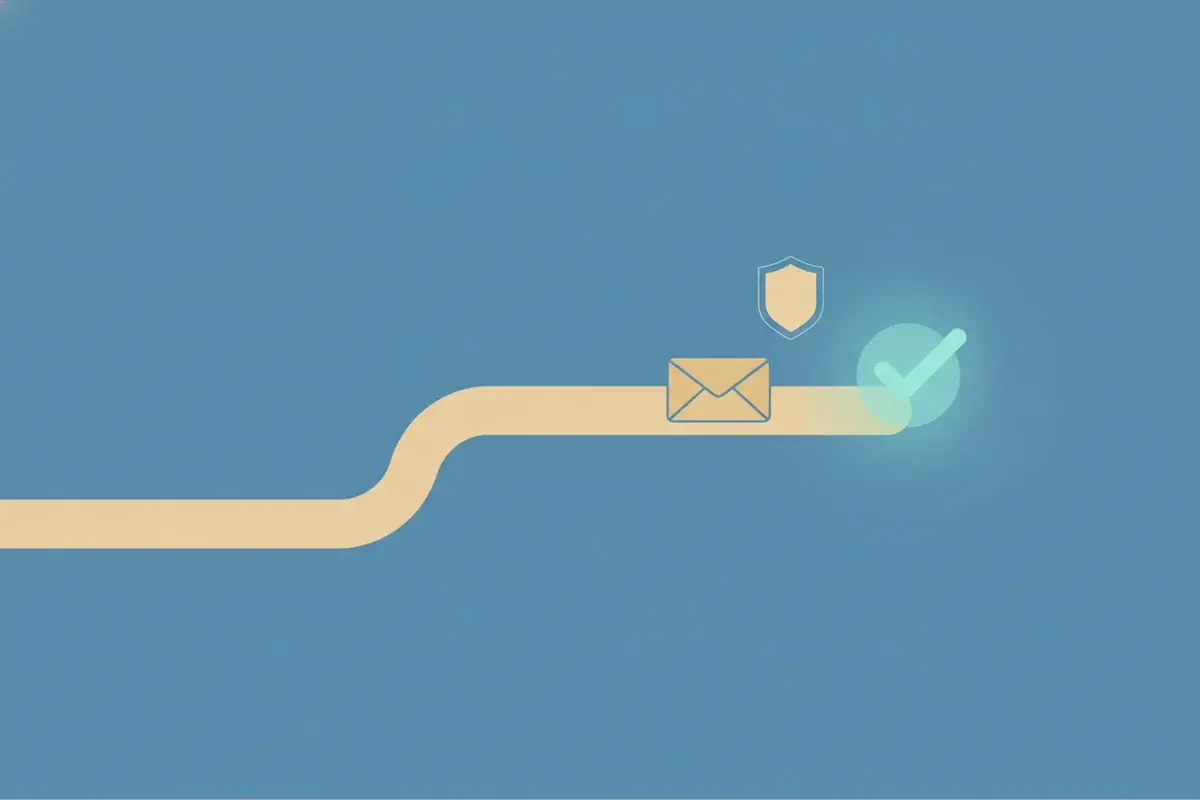
You submitted the application four days ago. Since then you've refreshed your inbox more times than you'd like to admit, checked your spam folder twice, and started wondering if you did something wrong.
You didn't. This is normal. And there's a name for the thing you're actually waiting on: Goodstack.
Google for Nonprofits Verification Stuck? Here's the Real Timeline
Here's the direct answer, because I know that's what you came here for. Goodstack verification for Google for Nonprofits normally takes 3 to 5 working days. The official range is 2 to 14 working days. If you're inside that window, you're not stuck—you're just in line.
If you're past 14 working days with nothing at all, that's a different conversation. We'll get there. First, let's clear up the three things that trip up almost every nonprofit in this process: not knowing who Goodstack is, missing the email because it landed in spam, and submitting details that don't quite match what's on file with your registry.
Who Is Goodstack, and Why Isn't It TechSoup?
Goodstack is the company Google now uses to verify nonprofit status for Google for Nonprofits. Not TechSoup.
If you've done this before—or read an old blog post, or talked to someone who set this up a few years back—you might be expecting a TechSoup validation token. That's out of date. Google moved nonprofit verification to Goodstack, and Goodstack runs the check directly through its own portal. No token. No TechSoup account required. If a guide you're reading mentions TechSoup as the current verification step, it's stale.
Goodstack isn't grading your mission. It's confirming three plain facts: that you're a real registered nonprofit, that your organization's details match what's on file with your country's charity registry, and that you are who you say you are.
If you haven't read the fuller picture of the program yet—what it includes, who actually qualifies—start with our full breakdown of Google for Nonprofits. This post picks up right where that one leaves off: you've applied, and now you're waiting.
Check Your Spam Folder First
Before you assume something's wrong, check spam. Every verification update from Goodstack—approval, rejection, or a request for more information—comes from verifications@mail.goodstack.org, and spam filters flag that address constantly.
Whitelist it the day you apply. Add it to your safe senders list. If your nonprofit runs on Google Workspace, ask whoever manages your domain to do the same on the admin side, not just your personal inbox.
SO. Before you write to anyone, search spam first. It's the fastest fix available to you, and in my experience it's the actual problem more often than an actual delay.
The Goodstack Verification Timeline, Step by Step
Think about what's actually happening behind that silence. It helps to see the whole chain, not just the part where you're stuck refreshing your inbox.
- You submit your Google for Nonprofits application. That submission routes automatically to Goodstack—you don't apply to Goodstack separately.
- Goodstack reviews your organization's records against your country's public charity registry. This is the 2-to-14-working-day window, typically landing at 3 to 5.
- You get an email—check spam—with the result. Approved, or a request for more information.
- Once approved, your Google for Nonprofits account activates. You now have access to the Google for Nonprofits hub.
- From the hub, you request each product on its own. Google Ad Grants, Google Workspace for Nonprofits, and the YouTube Nonprofit Program each have their own request step and their own timeline after this one.
That last step catches people off guard. Verification through Goodstack gets you in the door. It doesn't automatically hand you the $10,000-a-month Ad Grant. That's a separate request, with its own review, that checks things like whether your website is live and functioning—not a placeholder, not "under construction." Plan for that as its own short runway, not something that happens the moment Goodstack signs off.
What Goodstack Needs From You
Most delays trace back to one of these four things not lining up. Before you submit—or before you resubmit—confirm:
- Proof of registered charity status—your 501(c)(3) determination letter in the U.S., or the equivalent registration document for your country
- Organization details that match your registry exactly—legal name, address, and tax ID as filed with the IRS or your national charity registry, not a shortened or rebranded version
- A non-generic email address, ideally on your organization's own domain rather than a personal Gmail account
- A working website that actually represents your organization—live, current, and not still under construction
Here's what I've seen consistently: nonprofits that fail verification on the first try almost always have a mismatch between what they typed into the application and what's actually on file with their registry. A church that goes by a shortened public name but registered under a longer legal one. A nonprofit that moved offices and never updated its registry address. Small things. They still stall the check.
Want someone to check your details before you submit, instead of finding out after? Grab the free Ad Grant checklist—it walks through exactly what Goodstack and Google check before either one hands you access.
When 14 Working Days Turns Into a Real Problem
If you're past 14 working days, you've checked spam thoroughly, and you've confirmed your registry details are accurate—now it's worth acting instead of waiting.
Here's what actually helps:
- Reply directly to the original Goodstack email thread rather than starting a new inquiry from scratch. It keeps your case tied to the same reference number.
- Check your status inside the Google for Nonprofits portal. Sign in and look for a pending or in-review status rather than assuming silence means rejection.
- If you find a mismatch, resubmit with corrected details rather than waiting out a clock that was never going to resolve on its own.
Does it feel like you're stuck in a queue with no one on the other end? I get it. But a stalled verification is almost always a solvable mismatch, not a closed door. Fix the detail, reply to the thread, and the process moves again.
We've walked nonprofits through exactly this—organizations that assumed a slow week meant something was wrong, when the real issue was a spam filter or an old address on file. We wrote about whether the program actually delivers for the nonprofits that make it through, and the honest answer is yes, when the setup is right.
While You Wait, Get the Next Step Ready
Verification is the front door. It's not the finish line. The real prize on the other side is up to $10,000 a month in free Google search advertising through the Ad Grant—and that application has its own requirements worth preparing for now, while Goodstack works through your file.
We built a free checklist for exactly this moment: what your website needs, what your account structure should look like, and what disqualifies otherwise-eligible nonprofits before they ever get to run an ad. Grab the Ad Grant checklist and use this waiting period well instead of just watching your inbox.
What's the one thing on your site you already know isn't ready for an Ad Grant review? Start there today.
And if you'd rather not chase Goodstack on your own, we handle verification as part of Ad Grant setup—$750 one-time to get you verified, activated, and running real campaigns, then a flat $495 a month to manage the account. You send us the determination letter. We do the waiting.
I believe most of the nonprofits stuck in this exact spot right now are one small correction away from moving forward. Check your spam folder. Match your details. Reply to the thread. One step, and you're back in motion.
Free Download · Churches & Nonprofits
Get the Google Ad Grant Eligibility Checklist
Find out if your church qualifies for $10,000/month in free Google ads—the eligibility questions, the documentation Google looks for, and the order to do it in. Drop your email and I'll send it over.
Tagged

About the Author
Jon Horton is the founder of NewCulture. With 20+ years in technology and digital strategy, he helps businesses, nonprofits, and churches build their online presence and reach more people.
Keep Reading
More from the Blog

Does Your Church Own Its Website? What You Keep, What You Rent, and How to Check
Does your church own its website, or just get to use it while the bills stay current? Here's how to check the domain, the content, and the platform separately, so you know what you'd actually keep if you ever had to leave.

Best Church Website Builders in 2026: Tithe.ly, Subsplash, Nucleus, Wix, Squarespace and Custom, Compared Honestly
There's no single winner among the best church website builders, but there is a right one for your church. Here's an honest, fact-checked comparison of ten platforms, including our own custom builds, organized by the three things that actually decide it.
How to Move Your Church Website Off Wix or Squarespace Without Losing Your Google Rankings
How to move your church website off Wix or Squarespace without losing the Google rankings you already earned, using the same eight-step migration checklist we run for church website launches.