

NewCulture Consulting

AI for Small Business

AI for Small Business: A Practical Guide to Using AI in Your Business

The AI conversation is loud, fast, and mostly overwhelming. This is the honest version — what AI actually does for a small business, which tools are worth your time, and how to start without losing your mind.

Every conference, every newsletter, every vendor is promising that AI will transform your business by Tuesday. Most of it won't. Some of it absolutely will. The hard part is knowing the difference.

Here's the truth most of the noise skips over: AI isn't a strategy. It's a tool — a remarkably good one — for doing work you already understand, faster. The businesses winning with it aren't the ones chasing every new app. They're the ones who picked one tool, solved one real problem, and built from there.

So that's what this guide does. We'll walk through what AI means for a small business, why it matters more than the hype suggests, the tools actually worth using, the workflows to start with, and how to build a real strategy instead of a pile of half-used subscriptions. No jargon. No fear. Just the next right step.

The Foundation

What Is AI for Small Business?

Strip away the buzzwords and it's simple. AI for small business means using artificial intelligence tools to do real work — writing, researching, answering customers, organizing information, automating the repetitive stuff — faster and with less friction than doing it all by hand.

You don't need a data scientist. You don't need an enterprise budget. Most of what helps a small business today is available in a browser tab for the price of a couple coffees a month.

Think of it as hiring a fast, tireless, occasionally-wrong assistant. It drafts. You direct. It produces the first version. You bring the judgment, the context, and the voice that makes the work yours.

Why It Matters

Why AI Matters for Small Businesses

Big companies have teams. You have a to-do list and not enough hours. That's exactly why AI matters more for you than for them.

Used well, it gives a small team leverage that used to require hiring. The marketing you couldn't get to. The follow-ups that slipped. The research you didn't have time for. The reports nobody wanted to build. AI doesn't replace your people — it scales what your people can do.

The payoff comes down to four things: productivity, time savings, scalability, and efficiency. More work done. Less time spent. Growth that doesn't require a matching jump in headcount.

Want the longer version with real examples? We broke it down in how AI helps your business save time and grow revenue.

The Toolkit

Best AI Tools for Small Businesses

You don't need all of these. You need one, used well. Here are the tools that actually earn their place — what each is for, so you can match the tool to the job instead of chasing the loudest launch.

ChatGPT

OpenAI

The broadest all-rounder. Drafting, brainstorming, research, summarizing — a strong default first tool.

Claude

Anthropic

The strongest writer of the bunch. Long-form content, careful editing, and thinking out loud through a hard problem.

Gemini

Google

Best if you already live in Google Workspace — Docs, Gmail, Sheets. AI right where your work already happens.

Perplexity

Perplexity AI

Research with sources attached. When you need answers you can actually cite, not just a confident guess.

Canva (Magic Studio)

Canva

Design without a designer. Social graphics, presentations, simple brand visuals, background removal that works.

Zapier & Make

Zapier / Make

The glue. Connect the tools you already use and let AI do the repetitive step in the middle automatically.

Want the deeper rundown — including how to actually prompt these tools so the output isn't generic? Read the AI tools every small business owner should actually be using.

Put It to Work

AI Workflows Every Small Business Should Use

A tool is potential. A workflow is the thing that actually saves you hours. The difference is repeatability — a workflow is a step you do the same way every time, with AI carrying the heavy part.

Four to start with:

  • Content creation — turn one idea into a blog post, a few social captions, and an email, in one sitting.
  • Marketing — draft campaigns, subject lines, and ad copy you refine instead of write from scratch.
  • Customer communication — first-draft replies, FAQs, and follow-ups that keep your tone consistent.
  • Internal operations — summarize meetings, clean up notes, and turn messy input into clear next steps.
How to Use AI For Your Business — a 12-chapter beginner's guide for small business owners

The Shortcut

Don't Want to Piece It All Together Yourself?

You can absolutely build your own AI system from scratch. The tools are free, and the learning curve is real but manageable. But if you'd rather skip the trial and error, we put the entire playbook in one place.

How to Use AI For Your Business is the same framework we work through with consulting clients — productized so you can run it yourself, this weekend, with no tech background.

  • 12 chapters covering marketing, customer service, operations, and growth
  • 14+ tools reviewed by use case, difficulty, and cost
  • Plug-and-play prompt templates + a 90-day plan to build the habit
Get the AI Playbook

$27 $47Instant download — start reading in five minutes.

Reach More People

AI Marketing for Small Businesses

Marketing is where most small businesses feel the time crunch hardest — and where AI gives back the most hours. Not by replacing the strategy. By taking the friction out of the doing.

SEO content drafts. Blog outlines and first versions. Email sequences. Social captions in your voice. The work that used to sit on the someday list becomes something you can actually keep up with — as long as you stay in the driver's seat and edit everything before it ships.

The judgment still matters most: knowing which keywords are worth chasing, whether your site can even compete, what your audience actually needs to hear. AI helps you produce faster. It doesn't tell you what's worth producing. For a fuller picture, see how to use AI to grow your business and attract customers online.

Stop Doing It by Hand

AI Automation for Small Businesses

Every team has the same set of tasks they wish they didn't have to do. Tagging emails. Routing leads. Drafting reports. Following up. Syncing data between systems.

These jobs aren't valuable enough to hire for and not strategic enough to enjoy. They're also exactly what AI automation is now good at. Done right, the busywork runs quietly in the background — lead qualification, CRM updates, customer support triage, recurring reporting — and your team gets those hours back for the work only they can do.

Need help building automation that actually runs reliably — connected to the tools you already use?

Explore AI Automation & Integration Services

Avoid These

The Common AI Mistakes That Waste Time and Money

Most AI disappointment doesn't come from the tools. It comes from how people use them. Four traps catch nearly everyone:

  • Tool-chasing — collecting subscriptions instead of solving one real problem.
  • No clear goal — using AI because you feel you should, not because it's tied to an outcome.
  • Poor workflows — one-off prompts instead of a repeatable step that compounds.
  • No adoption plan — buying tools your team never actually builds into how they work.

We dug into the most expensive ones in 5 AI mistakes costing small business owners time — worth a read before you spend another dollar on tools.

The Plan

Building an AI Strategy That Fits Your Business

Here's where it all comes together. A real AI strategy isn't a list of tools. It's a short, honest answer to three questions: Where is AI actually going to help us? What do we do first? And how do we get the team to genuinely use it?

It usually moves in this order:

  • Opportunity assessment — find where AI saves the most time in how you already work.
  • Workflow prioritization — sequence the wins by impact and effort, not by what's trendy.
  • Tool selection — pick what fits your stack and your team, not the vendor with the loudest pitch.

Do that, and AI stops being another shiny tab nobody opens. It becomes a real multiplier. Not sure what a good advisor actually does here? We wrote what a good AI consultant does.

Want help building an AI roadmap tailored to your business — without the hype?

Explore AI Consulting

Common Questions

AI for Small Business: FAQ

AI for small business means using artificial intelligence tools — like ChatGPT, Claude, or Canva's AI features — to do real work faster: writing content, answering customers, researching, organizing data, and automating repetitive tasks. You don't need a technical background or a big budget. You need one tool, one use case, and a willingness to start small.

Start with whatever is eating the most time. For most owners that's writing (marketing, emails, content), research, and repetitive admin. AI drafts the first version, you edit and approve. From there you can layer in automation — lead follow-ups, reporting, data cleanup — so the busywork runs without you in the loop.

If you use it to multiply work you already understand, yes — the time savings are real and measurable. If you hand over the thinking and publish whatever it produces, no — you'll get generic output that sounds like nobody. The tool amplifies what's already there. Bring your judgment and your voice, and it pays off quickly.

There's no single winner — it depends on your workflow. ChatGPT is the broadest starting point. Claude is the strongest writer. Gemini wins if you live in Google Workspace. The real mistake is tool-chasing. Pick one, use it for two weeks on one real task, then decide what (if anything) to add.

Parts of it, yes. Anything repetitive and rule- or pattern-based — email triage, follow-ups, report generation, data cleanup, lead routing — is a strong automation candidate. The judgment work, the relationships, the strategy: that stays yours. The goal isn't to automate everything. It's to hand off the work nobody should be doing by hand.

Your Next Step

Pick the One Step That Fits Where You Are

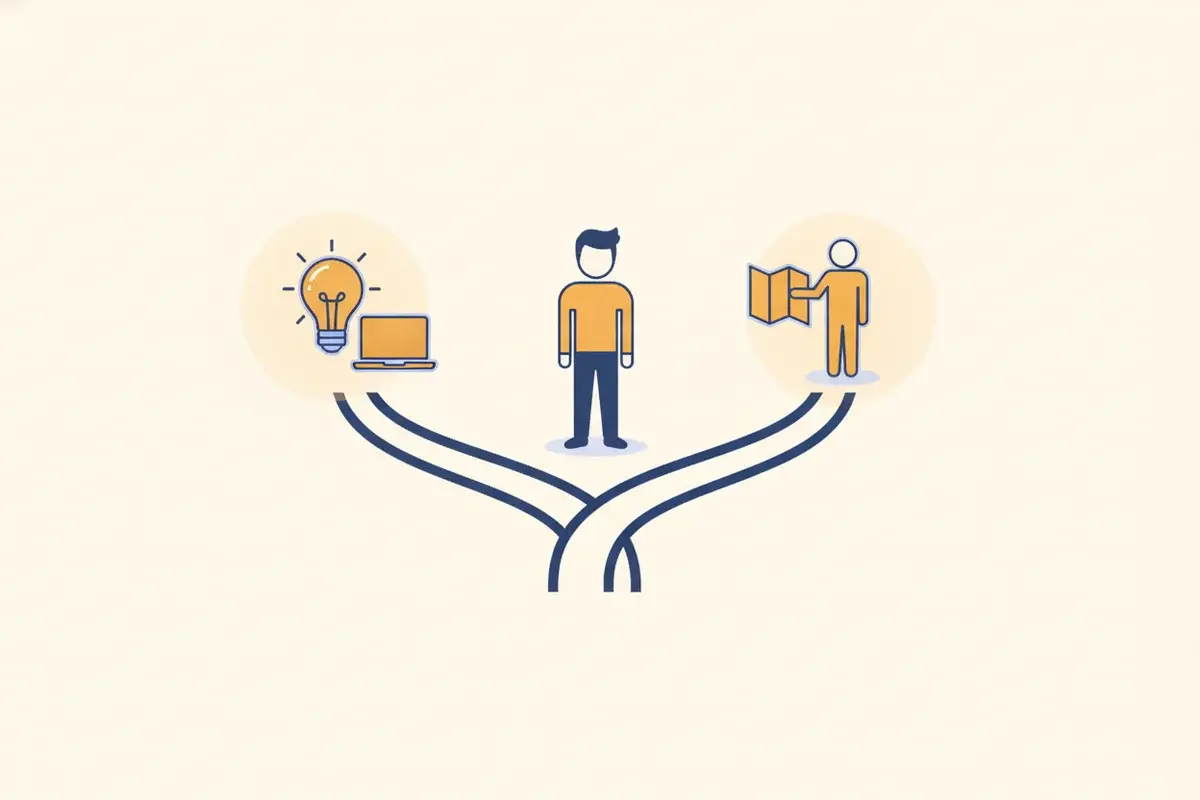
You don't have to do everything. You have to do the next thing. Choose the path that matches where you are today.

Learn

Get the AI Playbook

A 12-chapter beginner's guide: which tools, how to use them well, and a 90-day plan to build the habit. No tech background required.

Explore the Playbook

Strategy

AI Consulting

Get clarity on where AI helps, where it doesn't, and what to do about it this quarter — a roadmap built around your business.

Explore Consulting

Implementation

AI Automation & Integrations

Ready to build? We design and ship the automations that quietly take hours of repetitive work off your team every week.

Explore Services

Keep Reading

More on AI for Small Business