
Does Your Church Own Its Website? What You Keep, What You Rent, and How to Check

A church treasurer called the platform to cancel a contract that had run its course. She asked for an export of five years of sermon pages before the account closed. The answer came back polite and final: there wasn't one. The pages lived inside the builder. Cancel the plan, and they were gone with it.
Nobody did anything wrong. They picked a platform that fit a stretched budget, and for years it worked exactly as it was supposed to. This isn't a story about a bad decision. It's a question nobody asked.
Does your church own its website, or does it just get to use it until the bill stops? Most staff answer fast: of course we own it, we built it, we pay for it every month. Stop before you answer that fast.
A church owns its website only when it controls three things separately: the domain, the content in a form it can actually export, and the code or platform the site runs on. Most churches own the first outright, own the second only partly, and rent the third completely, without ever deciding to. "Owning a website" isn't one fact. It's three, and most staff have only checked one of them.
The Three Things You Either Own or Rent
Three things. The domain. The content. The code you run on. Get clear on each one separately, because a church can own two of the three and still lose everything if the platform behind door number three shuts its doors.
The Domain
Your domain is the one most churches actually do own, and it's worth confirming rather than assuming. Check who the registrar is, whose name and email sit on the account, whether autorenew is on, and who controls the DNS records that point your domain at your site. A domain you can log into and move is yours. A domain sitting inside someone else's account, even a well-meaning volunteer's, isn't fully yours yet.
The Content
This is where "we own it" quietly turns into "we can see it." Can staff download the sermon archive, the event history, and every page as a file they could hand to a new developer? Or can they only view it, edit it, and print it from inside the dashboard? A page you can read is not the same as a page you can take with you.
The Code or Platform
This is the one nobody checks, because it never comes up until the church tries to leave. Is the site built on something the church can move to a different host, or does it exist only inside one company's builder, running on their servers under their terms? A platform can raise its price, change its features, or fold into a bigger company at any time, and the church has no say in any of it. A custom-built church site removes that risk from day one. The code is yours, on a host you choose.
Does Your Church Own Its Website If It's Built on Wix, Squarespace, or Tithe.ly?
No church fully owns a website built on Wix, Squarespace, or a church-specific platform like Tithe.ly, because none of them give a documented, full export path off the platform. That's not an accusation against any of them. Plenty of good churches run well on each one. It's just the honest fact underneath the convenience.
Wix's own support documentation says it plainly: blog content can't be exported to another platform at all, and Wix doesn't publish a broader export path either. What you build in Wix mostly stays in Wix.
Squarespace does better, but only partly. It offers a WordPress-format export file covering layout pages and a single blog. Audio, video, product blocks, drafts, custom CSS, and your style settings don't make the trip.
None of the church-specific platforms, Tithe.ly, Subsplash, Nucleus, The Church Co, Ministry Designs, Sharefaith, or Clover Sites, publish an export path. Again, not an accusation. Ask directly, in writing, before you build years of content on an answer nobody has confirmed.
WordPress.org and a custom build are the only two paths with full, documented ownership of the domain, the files, and the database. We went platform by platform, church-specific builders included, in our full comparison of the best church website builders, and looked at the three general-purpose options head to head in Wix vs Squarespace vs WordPress for churches. This post goes narrower than both, straight at the ownership question underneath the platform choice.
What Do You Actually Keep If You Leave a Church Website Platform?
If you leave most church website platforms, you keep whatever your export tool actually captures, usually pages and maybe a blog, and almost never the working parts underneath them. The content is rarely the hard part. It's the plumbing that takes real time to rebuild. We've worked with churches locked into platforms that made getting their content out so difficult that the migration turned into staff and volunteers copying and pasting page after page out of the old system by hand. Laborious, frustrating, and completely avoidable if anyone had asked about export before they signed.
Files versus pages is the first gap. A page you can read on screen is not a file you can hand to someone else. Sermon audio and video, photo galleries, and downloadable resources often live outside whatever the export tool covers, even on platforms that do offer one.
Forms and giving records live with the processor, not the website. Your online giving history belongs to whichever payment processor handles it, tied to that processor's account, not to the site design sitting on top of it. A prayer request form, a connect card, an event RSVP: all of that data typically lives in the platform's own backend, not in anything an export brings with it. And giving data is where it gets worst. Have you ever tried to move recurring giving from one system to another? It's next to impossible. The subscriptions don't transfer, so it turns into a manual campaign where staff coach every recurring giver, one at a time, through re-entering their card with the new provider. Church management system data isn't much easier. Plan for it before you switch, not after.
Redirects don't come with you either. If people are already finding old sermon URLs through Google, or a link from three years ago still gets clicked, none of that routing moves automatically when you switch platforms. Skip it and years of search visibility can vanish along with the old links. We wrote the full playbook for handling that piece correctly in how to move your church website off Wix or Squarespace without losing your Google rankings.
Do We Own Our Domain Name?
Check your registrar account directly. Owning your domain means your church, not a person, controls the account it's registered under, with autorenew on and current contact information attached. This is usually the easiest of the three to fix, and the most commonly wrong.
Here's the version we've watched play out with several churches. Someone registered the domain years ago, sometimes decades ago, and nobody can remember which account it lives under, or whether it was a personal account or somebody else's. In a few of those cases the church had to abandon the domain entirely and leave the old site up, frozen, with no way to update it. Nobody thinks about this on the day they sign up. Everybody thinks about it the day they need to leave.
Who would you call today if your domain needed to be renewed by tomorrow? Do you know the registrar, the login, and the email on the account? If the honest answer is "I'd have to ask around," that's worth fixing this week, not after it becomes an emergency.
Does Owning the Site Mean We Need a Developer for Every Change?
No. Owning your website and needing a developer for every change are two separate problems, and a well-built custom site solves both. That assumption, that ownership means dependency, is the main reason churches stay on platforms they've outgrown.
We build custom Custom Church Websites on NewCulture Studio, our own CMS, so staff or a volunteer can update service times, sermon pages, events, and general pages without touching code. AI-assisted tools inside it can turn a bulletin or a sermon outline into a set of web updates in minutes, not an afternoon lost to formatting.
For churches that would rather hand the weekly upkeep to someone else entirely, our Fully Managed Publishing plan starts at $795/mo and has our team publish updates on your behalf every week, so nothing sits stale between Sundays.
Here's what ownership means on a NewCulture build, concretely. Every site is built so the church could take it with them if they ever wanted to. The Stripe account behind online giving is in the church's name, not ours. The hosting is set up under NewCulture so we can manage it well, and it's built to transfer to the church whenever they choose. If you grow to the point of bringing your website or development in-house, we support that with a straightforward offboarding process, and you leave with your information. The same architecture is what lets us manage the site for you at a fraction of the cost of a full-time hire.
So there's no long-term lock-in. You can keep working with us, partner with us to keep growing your web presence, or take it over at any point. An expert partner without the exorbitant fees or the walled garden. We've built this way for Advance Church in Fayetteville, and for Victory Church and Emmaus Church in Raleigh. Different histories, different platforms they moved off of, same result: a site the church actually owns, that doesn't require a developer to keep current.
The 10-Minute Ownership Check
You don't need a consultant for this part. Set a timer and walk through it yourself.
- Log into your domain registrar directly, confirm you can, and confirm your church's information is current on the account
- Ask your platform, in writing, whether a full content export is available, and what it does and doesn't include
- Write down who holds admin access to the website, and whether that person still serves at your church
- Confirm which name is on your giving processor account, separate from your website login
- Check who owns your Google Analytics and Search Console properties, and whether current staff can get into them. These get set up by a well-meaning volunteer who never transfers ownership, then leaves, and three years later nobody can find anyone with access
- Ask whether your site's content is backed up anywhere outside the platform itself
Six checks, ten minutes, and most churches find at least one gap they didn't know they had.
When Renting Is Fine
Renting can be exactly the right call, and for a lot of churches it's the smart one. A smaller church with a tight budget often should start by renting instead of buying. That's what gets the ministry online and growing, and if that's you, do it without feeling like it's a compromise. It isn't.
There does come a point, though, when you want to own the site and take responsibility for building it, because you have a vision for where it can go and you want to see it become real. Renting a space limits what you can do, what you can add, and what you can renovate. Think about where you see your church in five to ten years, and let that answer the question.
If your current platform mostly works but the site itself feels stale, slow, or hard to keep current, that's usually not a reason to rebuild from scratch either. Church website optimization fixes what's actually broken on the platform you're already on, no migration required. If growth is the real pressure behind the question, not ownership, when a church outgrows its website builder covers those signs directly. And if you just want a second, honest set of eyes on where things actually stand before you decide anything, that's what our church website audit is for.
Your Next Step
Log into your domain registrar tonight. Confirm whose name is on the account, that the contact email is one current staff actually checks, and that autorenew is on. That single login answers the one ownership question every church can check tonight, for free, in under five minutes.
I believe your church has more control here than it feels like right now. Most of this isn't a rebuild. It's a handful of logins and honest questions, asked once, written down somewhere your whole team can find them.
Free Download
Get the 10-Point SEO Checklist
The same checks I run first—in plain English, sorted by what to fix first. Drop your email and it's in your inbox in two minutes, plus a short series on getting your website found.
Tagged

About the Author
Jon Horton is the founder of NewCulture. With 20+ years in technology and digital strategy, he helps businesses, nonprofits, and churches build their online presence and reach more people.
Keep Reading
More from the Blog

Best Church Website Builders in 2026: Tithe.ly, Subsplash, Nucleus, Wix, Squarespace and Custom, Compared Honestly
There's no single winner among the best church website builders, but there is a right one for your church. Here's an honest, fact-checked comparison of ten platforms, including our own custom builds, organized by the three things that actually decide it.

How to Move Your Church Website Off Wix or Squarespace Without Losing Your Google Rankings
How to move your church website off Wix or Squarespace without losing the Google rankings you already earned, using the same eight-step migration checklist we run for church website launches.
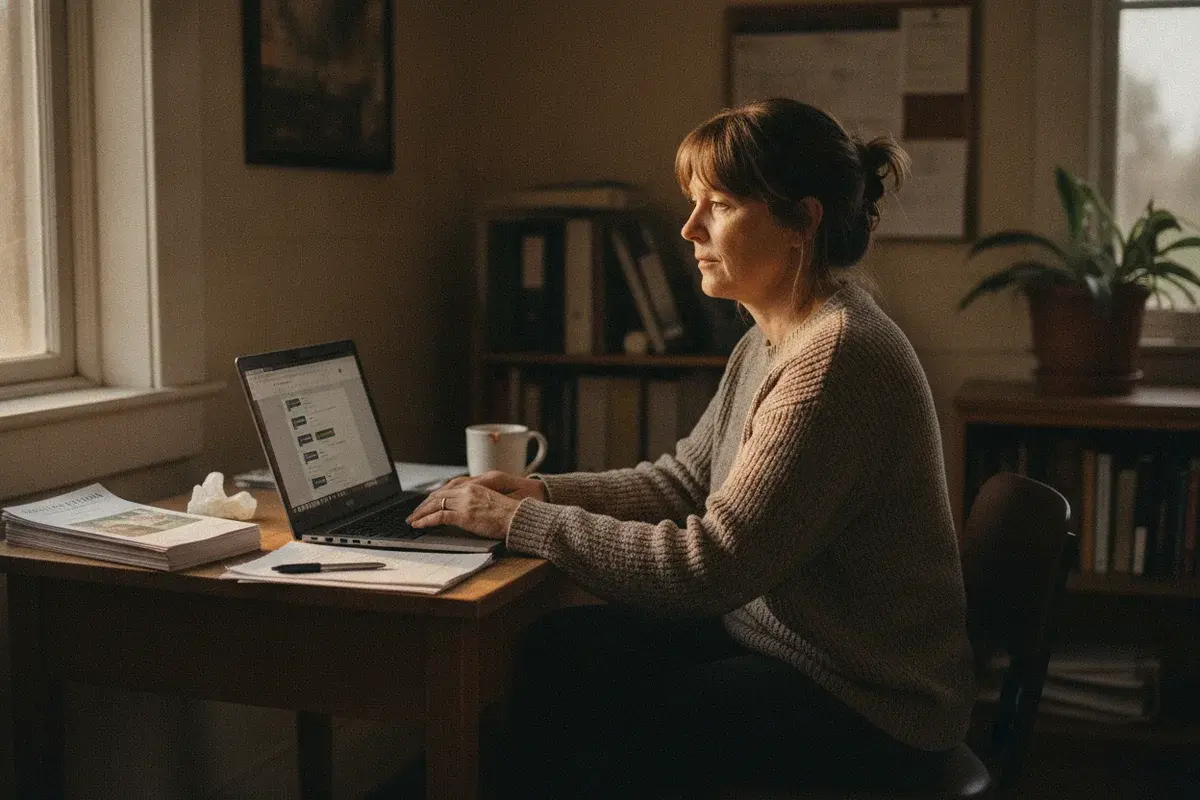
When a Church Outgrows Its Website Builder (And When It Hasn't)
Church website builder vs custom website is the wrong question for most churches, because most haven't outgrown Wix or Squarespace at all. Here's how to tell the difference honestly, before you spend a dollar changing anything.