
SEO for Churches in North Carolina: How People Find a Church Near Them
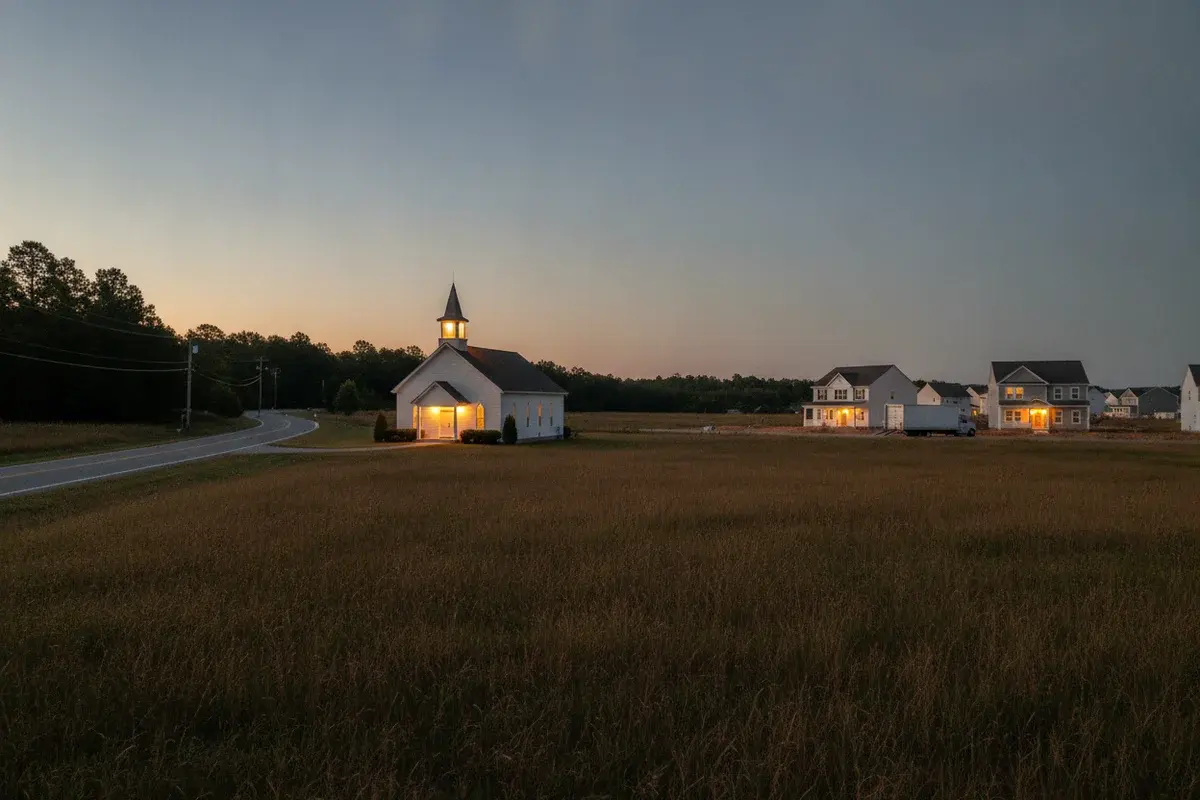
Somewhere in North Carolina tonight, a moving truck is getting unloaded. Boxes stacked in a garage, kids asleep in a room that still smells like paint, and a parent scrolling a phone at 9pm typing the same three words: church near me.
That happens every single day in this state. North Carolina is one of the fastest-growing states in the country—the Triangle keeps adding tech and biotech jobs, Charlotte keeps pulling in banking and healthcare workers, and the small towns between them are filling in faster than most people realize. Every one of those new residents needs a church. Almost none of them know yours exists yet.
Here's the direct answer, because I know that's what brought you here.
SEO for churches in North Carolina comes down to this: people find a church by searching "church near me" or a specific question in a hard moment, and SEO is what determines whether your church shows up when they do.
People find a church three ways in 2026: they search "church near me" on their phone, they search a specific question in a hard moment ("church for grief," "church that helps with rent," "contemporary church near me"), or a friend sends them a link. The third one is up to your people. The first two are up to your Google presence.
SO. If your church isn't showing up when someone searches for one nearby, that's not a preaching problem. It's a findability problem. And it's fixable.
SEO for Churches in North Carolina: How "Church Near Me" Actually Works
When someone types "church near me," Google doesn't search your website first. It searches your Google Business Profile—the listing tied to Google Maps that shows your name, address, hours, photos, and reviews. That's the Map Pack, the three listings that show up above every other result on a phone. For a huge share of church searches, the Map Pack is the whole decision. Nobody scrolls past it.
Three things decide who lands in that Map Pack:
- Proximity—how close your listed address is to the person searching
- Category accuracy—whether you've told Google you're a church, and which kind (nondenominational, Baptist, Catholic, and so on)
- Completeness and activity—service times, real photos, a working website link, and reviews from actual members
Think about what that means in practice. Two churches, same distance from a new family, same denomination. One has a claimed, complete Business Profile with accurate service times and forty reviews. The other has an unclaimed listing with no photos and a phone number that's been disconnected for two years. Google doesn't know which one is more faithful. It only knows which one gave it more to work with. That's the church that gets the Sunday visit.
If you haven't gone through this claim-and-complete process yet, we've written the full walkthrough of why churches don't show up on Google—start there if your profile is still unclaimed. This post picks up a level higher: not just the fix, but the strategy behind showing up across a whole state that's growing this fast.
What Your Website Must Answer in Five Seconds
Say you win the Map Pack. Someone taps your listing, lands on your homepage. You have about five seconds before they decide whether to keep reading or hit back and try the next church on the list.
In those five seconds, your site has to answer four questions without making anyone hunt:
- What time is the service?
- Where, exactly, is the building?
- What should I expect if I walk in?
- What happens with my kids?
That last one matters more than most churches realize. A parent deciding where to visit this weekend is often deciding for their kids first and themselves second. If your kids' ministry isn't visible—named, described, safe-sounding—within the first screen, you've lost a chunk of the families who'd otherwise show up.
This is exactly where good design and good SEO overlap. Google reads your homepage the same way that tired parent does—looking for clear, structured answers, not warm paragraphs about your community's heart for worship. Say the beautiful thing. Just say the practical thing first. We've covered the specific mistakes that quietly drive visitors away once they've already made it to your site—worth a read alongside this one.
If you want a second set of eyes on whether your own site answers those four questions fast enough, that's exactly what our Website & SEO Audit is built to catch—a clear, prioritized look at what's helping and what's costing you visits.
Metro Growth and Small-Town Ground: Two Different Games in NC
North Carolina isn't one search market. It's several, and the strategy shifts depending on which one you're in.
In the Triangle and the Charlotte metro, you're competing with dozens of churches inside a five-mile radius, plus every multi-campus network with a marketing budget bigger than your whole staff. Winning there takes content depth—real pages for real questions, sermon series that answer what people are actually searching, a site built to rank on more than your name alone.
In a small town or a rural county, the math is completely different, and it's better news than most small-church pastors expect. If you're the only Baptist church in your county with a real website and a claimed Business Profile, you can own that town's search results by default—not because you outworked ten competitors, but because there was no competition to begin with. Rural churches with almost no marketing budget often have the easiest path to ranking in this whole state, and most of them have never claimed the tools that would get them there.
Multi-campus churches carry a third challenge: each campus needs its own Business Profile, its own local page, its own service times—not one page trying to represent five locations at once. Google treats each campus as its own local search, and it ranks accordingly.
We've walked this with churches at every one of these scales. NewSpring Church configured multiple campus sites across several locations and ranks for both local searches and much broader, global ones—proof that the metro-competitive approach works when it's built right. On the smaller end, The Ancient Way built its strategy from day one around organic search and now sees 3,000-plus monthly visits from people finding it through Google alone, with no ad spend behind it. Different scale, same underlying discipline.
Teaching Content Is Reach, Not Just Ministry
Here's something that surprises a lot of pastors: your sermons are one of your biggest untapped search assets, and most churches never publish them anywhere Google can read.
Remember the second way people find a church—the question search in a hard moment. Someone searching "how do I forgive someone who hurt me" or "what does the Bible say about anxiety" isn't looking for a church directory. They're looking for an answer. If your sermon archive is a list of audio files with no text, no titles, no summaries, Google has nothing to show them. If it's a searchable page with real titles, short written summaries, and the actual questions people ask, you become findable to someone who's never heard of your church and wasn't looking for one yet.
That's not marketing dressed up as ministry. That's showing up for someone at the exact moment they're searching for hope, direction, or an answer—which is what you'd want to do for them anyway. The SEO and the calling point the same direction here.
Ask yourself: if someone searched "how do I forgive someone who hurt me" tonight, would your sermon archive even show up? For most churches, the honest answer is no. Not because the sermon wasn't good. Because Google never had a chance to read it.
Where to Start This Month
You don't need a twelve-month plan to move the needle. You need one step, done well, this month.
Start here: claim and fully complete your Google Business Profile if you haven't, confirm your service times and address are correct everywhere they appear online, and make sure your homepage answers those four questions—time, place, expectation, kids—without anyone scrolling. If you're further along than that, look at whether your sermon archive is actually searchable, and whether your site is built for your specific market, metro or small-town, rather than a generic template.
Want the full list in one place? We've broken down the exact keywords churches in North Carolina should be targeting, section by section, if you want to go deeper than this post.
Are you ready for the next family that moves to your town to actually find you? Start with one thing this week. Claim the profile. Fix the homepage. Publish one sermon with a real title and a real question attached to it. See how we help North Carolina churches build the digital presence their mission deserves, from the Business Profile up through a full strategy.
I believe the church down the street from that moving truck is supposed to be found. Not chased down. Found. Make it easy, and watch who shows up.
Free Download
Get the 10-Point SEO Checklist
The same checks I run first—in plain English, sorted by what to fix first. Drop your email and it's in your inbox in two minutes, plus a short series on getting your website found.
Tagged

About the Author
Jon Horton is the founder of NewCulture. With 20+ years in technology and digital strategy, he helps businesses, nonprofits, and churches build their online presence and reach more people.
Keep Reading
More from the Blog

How a Free Web Tuner Earned Savior Guitar 1,400 Clicks, AI Citations, and the Case for a Pro App
A touring guitar tech in Goldsboro, NC had expert tuning methods and no way to share them beyond the bench. We built a free web tuner, used SEO to connect it with people searching for specific tunings, watched clicks climb from a handful a day to dozens, and then turned the proven demand into a pro tuner app for iPhone and Android.

Best Church Website Design Companies in 2026: 12 Firms Compared on Price, Timeline, and Who Owns the Site
The best church website design companies aren't the ones with the flashiest portfolio. They're the ones that tell you the price, the timeline, and whether you'll own the site before you sign anything. Here's an honest, fact-checked comparison of twelve firms, ours included.

The Real Church Website Cost Over Five Years (Builder, Platform, Custom, and the Volunteer Nobody Counts)
What does a church website cost over five years, once you count the subscription, the setup, the hours somebody spends updating it, and the redesign you'll do at least once? Here's the honest model, built on real published prices, not just the monthly number your finance committee sees.